A bespoke CRM usually means one of two things: build it yourself on a configurable platform, or pay a developer to build software from scratch. Telagus is a third option. Our team sets Telagus up around how your business already works, on a normal subscription, so you get a CRM that fits without a development project.
You bought a CRM to make life easier. Six months later, your team keeps a spreadsheet on the side, half the fields say “Other”, and nobody trusts the pipeline report. The problem usually isn’t your team. It’s that most CRMs are built for an imaginary average business, and you’re expected to reshape your sales process to match.
This guide compares the three ways to get a CRM that fits, then walks through a real example: how we would set Telagus up for a skip hire business, from first enquiry to paid invoice.
Why off-the-shelf CRMs make you adapt
The big platforms are powerful, but they hand you a blank toolbox and leave the building to you. Small teams rarely have the time or a dedicated admin to do it properly. The result is a CRM that looks like everyone else’s and fits nobody.
The warning signs are familiar:
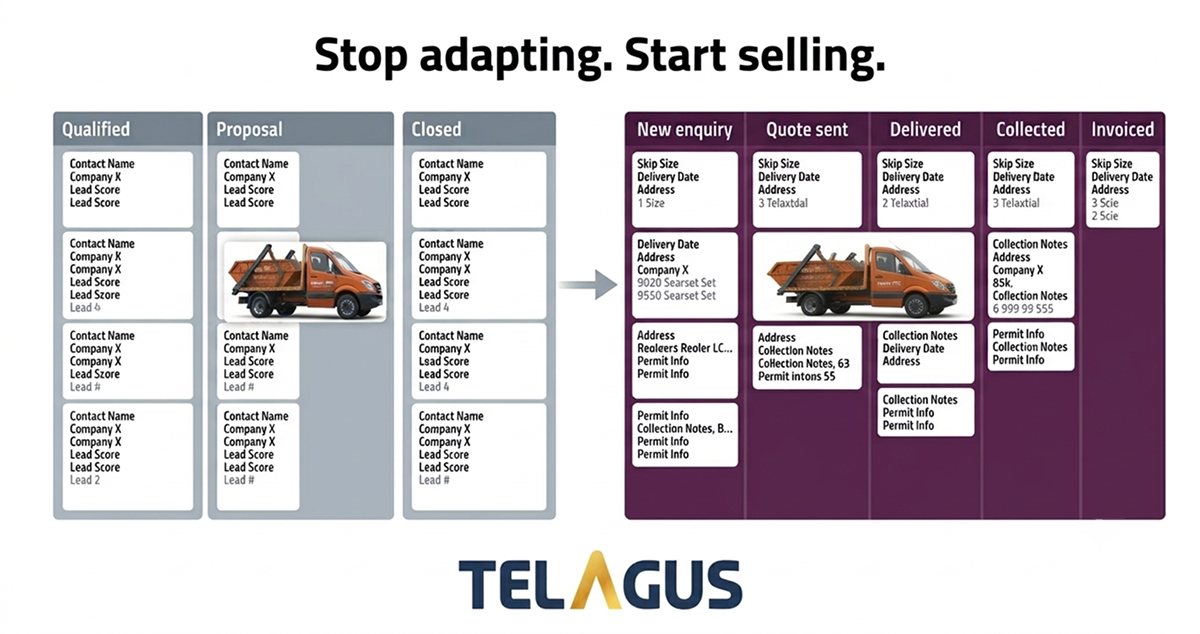
- Pipeline stages that don’t match reality. “Qualified, Proposal, Closed” means nothing to a skip hire firm or a dental clinic.
- Fields you never use, and missing fields you need. So the real details end up in notes, emails or someone’s head.
- Separate tools for everything else. Quotes in one app, invoices in another, projects in a third, and nothing talks to each other.
- Manual follow-ups. Reminders, emails and texts all depend on someone remembering to send them.
- Low adoption. When the CRM feels like extra admin, the team quietly stops updating it.
Every workaround costs time, and every missing update costs you visibility over your own pipeline. We cover the cost of juggling separate tools in why use an all-in-one CRM.
Three ways to get a bespoke CRM
If a standard setup doesn’t fit, these are your options.
| Build it yourself on a configurable CRM | Custom CRM built by a developer | Telagus, set up for you | |
|---|---|---|---|
| Cost | The subscription, plus your own time | A project fee. Published UK quotes start at £2,500 for a core CRM and run to £18,000 and more with automations and integrations, plus ongoing maintenance | Your Telagus subscription. Setup, data migration and onboarding are free on every paid plan |
| Time to go live | However long it takes you to learn the tool and build it | Weeks to months: one developer quotes 4 to 12 weeks, and Bitrix24 says a from-scratch build takes 6 to 12 months to match a standard CRM on the basics | Most small businesses are up and running quickly once we’ve mapped how they work. Your data is moved within 2 working days |
| Who does the setup | You, or whoever on your team has time | The developer, from your specification | Our team, after a call to map how you work |
| Who makes changes later | You | The developer, usually as paid work | Our team, free on paid plans: ask in your WhatsApp support group |
Checked November 2026. Sources: Codingclave: CRM development cost UK (a CRM developer’s own price list), Bitrix24: custom CRM development. Developer quotes vary widely with scope, so ask for a fixed quote that includes maintenance.
A custom build makes sense when your process is truly unusual, or you need to own the code. For most small businesses, the problem isn’t the software. It’s that nobody has had time to set it up properly. That’s the part we do for you.
What we tailor
With Telagus, we start from your process, not a template. Then we shape the CRM to match it.
| What we tailor | What it means for you |
|---|---|
| Pipelines and stages | Your real sales steps, named the way your team talks, with separate pipelines for different services if you need them |
| Custom fields | Capture the details that matter to your business, from job size to site address to renewal date |
| Automations | Follow-up emails, SMS messages and tasks that fire on their own when a lead moves stage |
| Quotes, contracts and invoices | Go from lead to quote to signed contract to paid invoice without leaving the CRM |
| Projects and tasks | Turn an accepted quote into a project with milestones and tasks for the team delivering it |
| Campaigns | Email and SMS campaigns sent straight from your contact list |
| Reporting | Lead, ad and website reports that show the numbers you actually care about |
You get one system that fits the way you work, instead of five tools held together with copy and paste.
Example: a CRM set up for a skip hire business
Here is how we would set Telagus up for a skip hire company. The same approach works for any business: we map the real steps first, then build the CRM around them.
1. A pipeline that matches the job
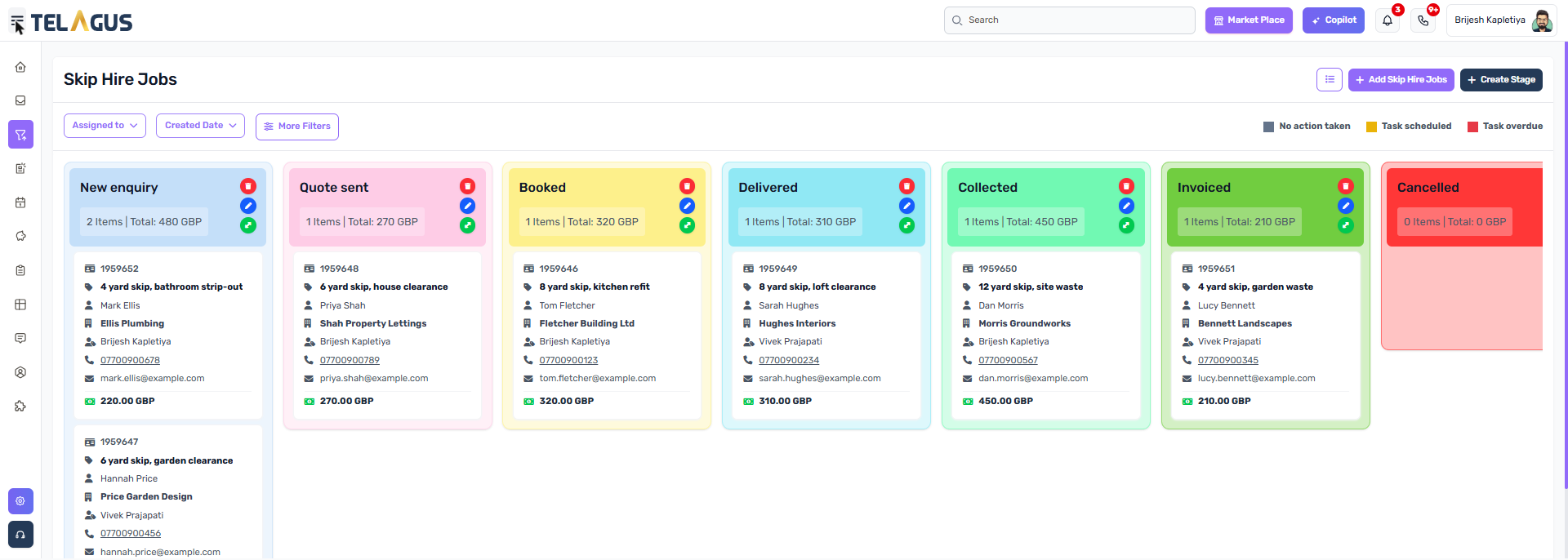
A generic “Qualified, Proposal, Won” pipeline doesn’t describe skip hire. So the stages follow the job itself:
New enquiry → Quote sent → Booked → Delivered → Collected → Invoiced, plus a Cancelled stage for jobs that fall through
Everyone can see at a glance which skips are booked for tomorrow, which are on site and which are waiting to be invoiced.
2. Custom fields for the details that matter
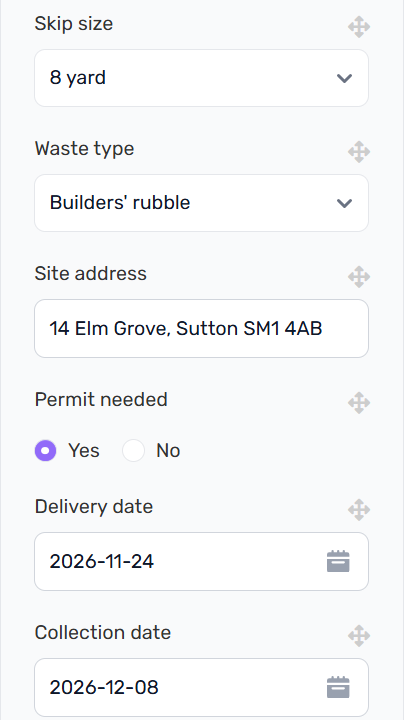
Instead of burying the details in notes, each lead gets fields for:
- Skip size
- Waste type
- Site address, if different from the billing address
- Permit needed (yes or no), for skips placed on the road
- Delivery date and collection date
Now the office can filter for every skip due for collection this week, or every job that still needs a permit, in seconds.
3. Automations that run when a job moves on
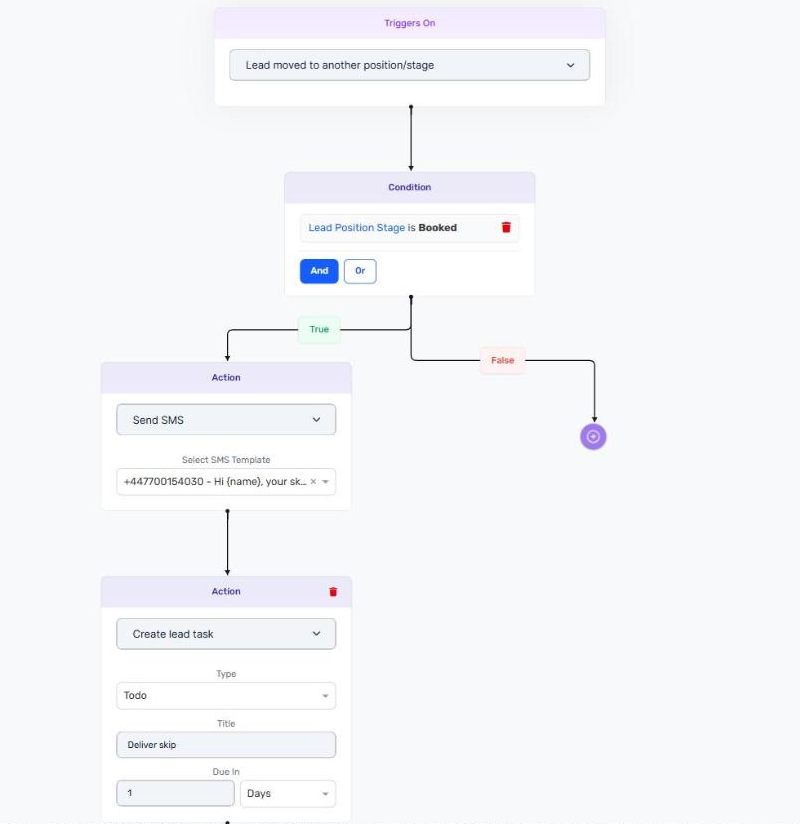
Telagus automations can start when a lead moves to another stage. For skip hire, that might mean:
- Moved to Booked: send the customer a confirmation text from your SMS templates, and create a “Deliver skip” task due the next day.
- Moved to Delivered: create a task to book the collection.
- Moved to Collected: create a task for the office to raise the invoice.
Nobody has to remember the next step. The CRM hands it to the right person.
4. From quote to paid invoice
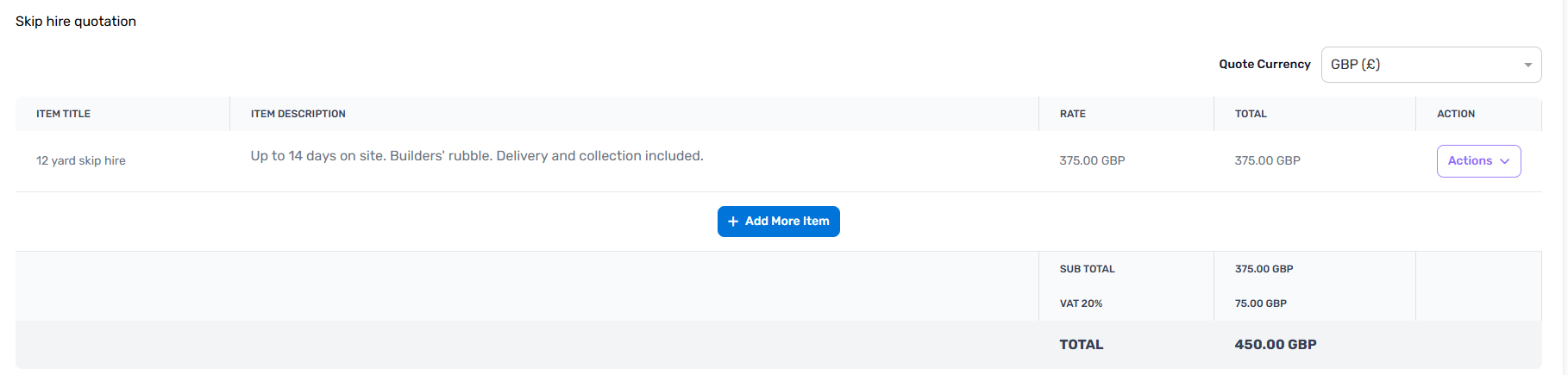
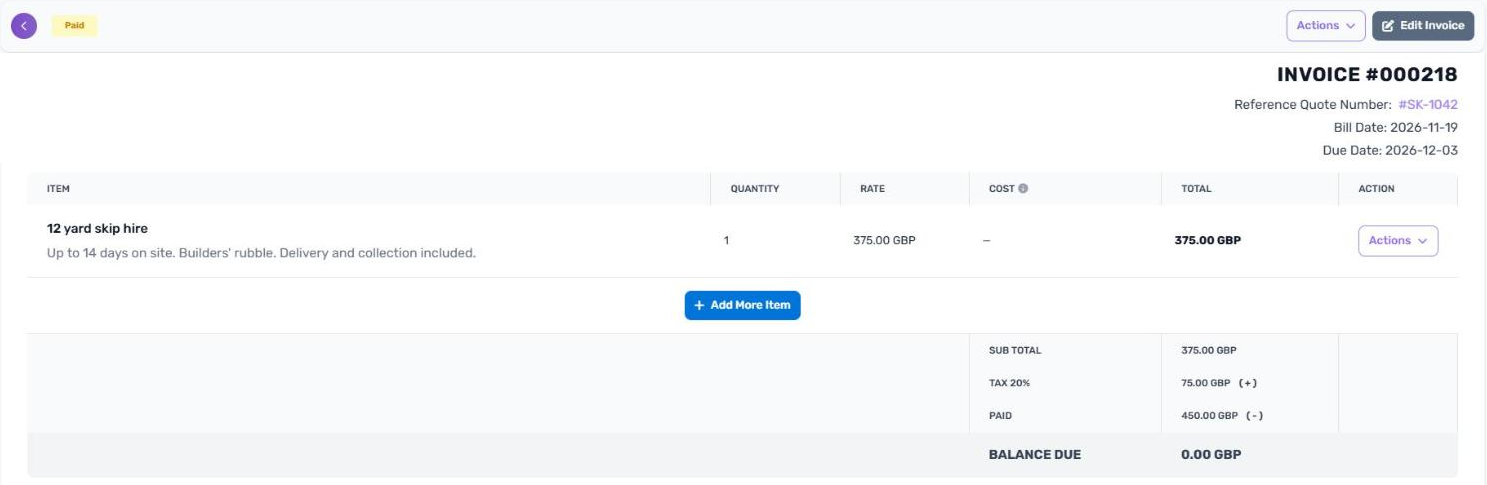
When an enquiry comes in, the office sends a quote from the lead record, with the skip size and price. Once the customer accepts and the job is collected, the quote becomes an invoice in one step, and the payment is recorded against the same customer. Nothing is retyped, and the customer’s full history stays in one place for the next booking.
How it works
Getting a CRM that fits you shouldn’t mean a long, expensive project. On every paid Telagus plan, here’s how we do it:
- We learn how you work. A short call to map how leads come in, how you quote, who follows up and what happens after a sale.
- We build your setup. Our team creates your pipelines, stages, custom fields and automations to mirror that process.
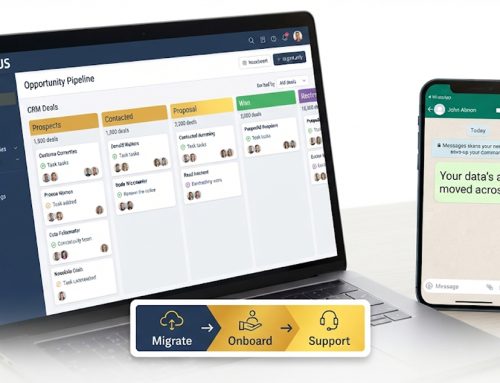
- We move your data across, free. Contacts, deals and notes come over from your old CRM or spreadsheets, within 2 working days of receiving your data.
- We onboard your team, free. We walk your team through the CRM using your own data, so it feels familiar from day one. Onboarding is unlimited, so new starters get the same help.
- We stay with you. Questions and changes go through your own private WhatsApp support group, not a ticket queue. We reply within 24 hours, Monday to Friday.
As your business changes, your CRM changes with it. New service? New pipeline. New step in your process? New stage and automation. On paid plans, we make those changes for you at no extra cost.
For the details of what we move and how onboarding works, see free CRM migration and onboarding.
Who it’s for
A tailored CRM makes the biggest difference to small and growing businesses whose process doesn’t fit a standard sales funnel. For example:
- Trades and home services. Track enquiries, site visits, quotes and job completion in one pipeline.
- Clinics and wellness businesses. Manage enquiries, bookings and follow-ups for returning clients.
- Agencies and consultancies. Move from proposal to contract to project delivery in one place.
- Waste, hire and logistics firms. Handle high volumes of quick quotes and repeat customers without losing track.
If your team has ever said “the CRM doesn’t really work for us”, this is for you.
Frequently asked questions
What is a bespoke CRM?
A bespoke or custom CRM is one shaped around your own business: your sales stages, the details you record and the follow-ups you send. You can get one by building it yourself on a configurable platform, paying a developer to build it from scratch, or having a provider like Telagus set it up for you.
Is a custom CRM expensive?
It can be if it is built from scratch, because you pay a development fee and usually maintenance too. With Telagus, you’re not paying for software built from scratch. We tailor Telagus to your process, and on every paid plan, setup, onboarding and data migration are free.
Is this included on the Forever Free plan?
No. Setup, data migration, onboarding and WhatsApp support come with the paid plans: Starter, Growth and Business. You can compare them on the pricing page.
How long does setup take?
It depends on how complex your process is, but most small businesses are up and running quickly once we’ve mapped how they work. We move your data within 2 working days of receiving it.
What if my process changes later?
Tell us in your WhatsApp support group. On paid plans, we adjust your pipelines, fields and automations as you grow, at no extra cost.
Stop adapting. Start selling.
Your CRM should work the way you do. Book a free call with the Telagus team and we’ll show you what your business looks like inside a CRM built around it.